 Ek Dum Desi – Your Desi Fitness Tips Buddy Find all desi tried and tested by millions fitness tips here.
From My Village Dhoop to City Lights: Why I Still Dream of Haryana
You know, life has a funny way of pushing you forward, sometimes so fast you forget to look back. I'm 35 now, living in Gurugram, working hard, breathing the city air. But honestly, every single day, my mind drifts back. Back to the dusty lanes of Khera, my ancestral village near Rohtak, where I spent my childhood. The smell of wet earth after rain. The sound of buffaloes chewing fodder. The endless starry nights.
I left Khera when I was 18, bright-eyed, ready to conquer the world. Thought I'd never look back at those simple haryana traditions, those old-fashioned ways. But here's the thing about your roots: they pull you back. Especially when you see how much of that realness, that groundedness, is missing in the concrete jungle.
That's why I started writing for Ek Dum Desi. To talk about my Haryana, the real Haryana. Not the one you see in headlines, but the one that lives in our homes, our hearts, our fields. The one where haryanvi culture isn't just history, it's alive, breathing, thriving. So, let’s talk about some of those ancient traditions that, despite everything, still live on today. They’re not just practices; they’re the soul of our people.
The Taste of Home: More Than Just Food, It's Our Soul on a Plate
When people think of Haryana, they often think of strong men and fields. They're not wrong, but what powers all that strength? Our food, my friends. Our absolutely unparalleled food. It’s simple. It’s hearty. And it’s cooked with generations of love.
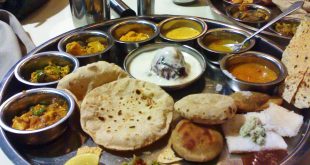
Take bajra roti, for instance. Oh, the bajra roti! I still remember my Nani, with her weathered hands, expertly patting the dough on a wooden board. Flipping it onto the hot *tawa*, then directly into the dying embers of the *chulha*. That smokiness from the clay chulha gets into the roti in a way a gas stove can never replicate. Never. Then a generous dollop of pure white *ghee* on top. That's a meal.
And what do you eat it with? Sarson ka saag, especially in winter. Or a simple daal, slow-cooked all day. Growing up in Khera, we never missed a meal of bajra roti with fresh white butter and a glass of creamy, thick lassi. Not the watery city lassi, mind you. I'm talking about lassi so thick you can almost chew it. My opinion? Personally I think bajra roti with ghee is better than any restaurant bread, any day. It’s got history in every bite. It truly represents the traditions of haryana, passed down from kitchen to kitchen.
Another classic is churma. Crushed roti, mixed with ghee and jaggery. A powerhouse of energy. A treat for kids, and a quick, satisfying meal for farmers. These aren't just recipes; they are our connection to the land, to the seasons, to our ancestors who perfected these dishes out of necessity and turned them into art. We eat what we grow. It’s that direct.
Sweat, Soil, and Strength: Where Our Wrestlers Are Forged
You can’t talk about Haryana without talking about wrestling. Kushti. It’s in our blood, literally. From the smallest village to the big *akhaadas*, the spirit of the *pehelwan* is revered. When I was a boy, every evening, after school, we'd gather around the village *akhaada*. We’d watch the older boys, the *pehelwans*, train in the soft, red soil.
The dedication. The discipline. It’s incredible. They eat special diets – milk, ghee, almonds, sometimes chicken. No junk food. No distractions. Just pure focus on strength and technique. This isn't just a sport for us; it’s a way of life, a philosophy. It teaches respect for your guru, for your opponent, and for your own body. Look — it’s about character building. And honestly, most people outside the state have no idea this even exists at this level, this deep commitment to such an ancient practice.
I remember one time, during the annual village fair, there was a big wrestling match. Our local champ, a young man named Balwan Singh, was up against a much older, more experienced *pehelwan* from a neighboring village. The whole village held its breath. Every grunt, every slap of flesh, echoed in the evening air. Balwan, smaller but fiercer, fought with all his heart. He didn't win that day, but the respect he earned, the pride he brought to our village through his effort, that was priceless. This tradition, this relentless pursuit of physical and mental strength, is one of the most enduring haryanvi culture aspects that remains unchanged.
Beyond The Headlines: Understanding Our Gaon Ke Riwaaj
Now, let's talk about something a little more complex: our social structure, our village customs. You might have heard things about *Khap Panchayats*. And yes, there are controversies, things that need to evolve. But the thing is, the core idea behind many of these *gaon ke riwaaj*, these rural haryana customs, was community. It was about dispute resolution, maintaining harmony, and ensuring justice at a local level, long before courts were easily accessible.
In our villages, respect for elders is paramount. You address an older man as *Tau* or *Taya*, an older woman as *Taayi* or *Chachi*. These aren’t just titles; they signify a bond, a responsibility. Your Bhabhi (sister-in-law) is revered; she’s often seen as a second mother. There's an unspoken code of conduct, of mutual support. If someone in the village needed help, everyone pitched in. Whether it was harvesting a field, building a house, or arranging a wedding. That's brotherhood, that's *bhaichara*.
I remember when a storm hit our village one monsoon, destroying a part of our neighbour's mud house. Within hours, men from every household were there, bringing tools, offering their strength. The women brought food and chai. No one asked for payment. It was simply what you did. This deep sense of belonging, of collective responsibility, that’s a tradition that still binds us. This is the bedrock of our haryanvi culture.
When Every Season is a Celebration: Our Festivals Keep History Alive
Our calendar is marked by festivals, and each one brings with it a surge of energy, music, and colour. They’re not just days off; they’re a way to connect with our spiritual side, with our community, and with the rhythms of nature.
Take Teej, for example. The festival of swings! As a kid, I remember the women, dressed in their brightest colours, singing traditional songs, pushing each other on swings tied to huge banyan trees. The monsoon rains would have just cleansed the earth, everything was green and fresh. It was pure joy. A simple pleasure, but oh so memorable.
Then there's Lohri in winter. The bonfires, the crackle of peanuts and popcorn, the warmth of the fire against the biting cold. Families gather, share stories, sing folk songs. It’s a festival of gratitude for the harvest, for the warmth of family, for a prosperous year. And of course, Holi, or as we call it, Phaag, is a riot of colour and mischief. The singing of *phaag* songs, the playful throwing of colours, the special sweets. It’s all about letting go and celebrating life together.
These festivals, they aren't just events. They're threads woven into the fabric of our lives. They're how we teach our children about our past, about our community, about the importance of celebration and togetherness. They are the living, breathing essence of haryana traditions.
Boli, Bhaichara, and Bajiya: Why These Old Ways Matter
From the robust flavour of our food to the unyielding spirit of our wrestlers, from the bedrock of our community customs to the colourful burst of our festivals – what ties it all together is a distinct haryanvi culture. The way we speak, our *boli*, full of strength and directness. The *bhaichara* that runs through our veins. The *bajiya* (respect) we have for our elders and our land.
These aren't just old practices we keep around for novelty. They are core to our identity. They give us strength, they give us a sense of belonging, and they connect us to something much larger than ourselves. They are the wisdom of generations, wrapped in the everyday. Living in the city, I see people searching for meaning, for connection. I think back to my village, and realize that we had it all along. Sometimes, the oldest paths are the ones that lead to the most profound truths. So, what about your roots? What traditions keep calling you home?