In short: Gurpurab marks the birth anniversary of Guru Nanak Dev Ji and falls on the full moon of the month of Kartik, usually in November. In Punjab it is celebrated with weeks of early-morning prabhat pheris, a 48-hour Akhand Path, a nagar kirtan led by the Panj Pyare, langar for everyone who walks in, and gurdwaras glowing with lamps on the night of the full moon.
It starts in the dark.
Around four in the morning, sometime in late October, you hear it first from a distance: a dholki, a few voices, the rhythm of a shabad coming down the lane. Then the lights of a small group, a few elders in front, children rubbing their eyes at the back, women carrying the Nishan Sahib with both hands. That is the prabhat pheri, and in the village in Ludhiana district where my nani lived, it meant Gurpurab was coming.
I was a child who did not like waking up early. I still remember running out in a shawl to join them anyway, because there would be hot tea and pinni at the last house on the route.
What is Gurpurab and why is it in November?
Gurpurab, also called Prakash Purab, celebrates the birth of Guru Nanak Dev Ji, the first Sikh Guru, born in 1469 at Talwandi, the town now known as Nankana Sahib in Pakistan. The celebration follows the lunar calendar and falls on Kartik Purnima, the full moon of the month of Kartik.
That is why the date moves every year but almost always lands in November. The gurdwara committee announces the programme well in advance, and the exact date is best checked with your local gurdwara.
Guru Nanak’s message was simple enough for a child to remember: Naam Japna, Kirat Karni, Vand Chakna. Remember the divine, earn honestly, share what you have. Almost everything that happens during Gurpurab is a version of that idea.
How does Punjab prepare in the weeks before?
The prabhat pheris begin two or three weeks ahead. Each morning the group visits a different street, and the family that hosts them at the end of the route serves tea and something sweet. In many villages this is planned house by house, and families take real pride in their turn.
Two days before the main day, the Akhand Path begins. This is a continuous, uninterrupted reading of the Guru Granth Sahib from beginning to end, taking about 48 hours. Readers take turns through the night. Walk into a gurdwara at three in the morning during an Akhand Path and you will find it peaceful, warm and never empty.
Our longer piece on the traditions of Punjab covers how these rituals sit alongside Lohri and Baisakhi in the yearly calendar.
What happens during the nagar kirtan?
The day before Gurpurab, the whole town comes out for the nagar kirtan. The procession is led by the Panj Pyare, five baptised Sikhs dressed in saffron, walking barefoot with swords. Behind them comes the Guru Granth Sahib on a beautifully decorated vehicle covered in flowers, and then the sangat, singing.
Gatka teams perform along the route. Swords swing, sticks clash, and teenagers who have been practising for months finally get their audience. If you have read our story on Punjab’s fitness culture, you will recognise the same discipline here.
Shopkeepers set up stalls with tea, chole, fruit and sweets, and nobody pays for anything. That surprised a friend from Bengaluru whom I took along a few years ago. “Who is paying for all this?” he kept asking. The honest answer is: everyone, together.
Langar: the heart of the day
If you want to understand Gurpurab, sit down for langar.
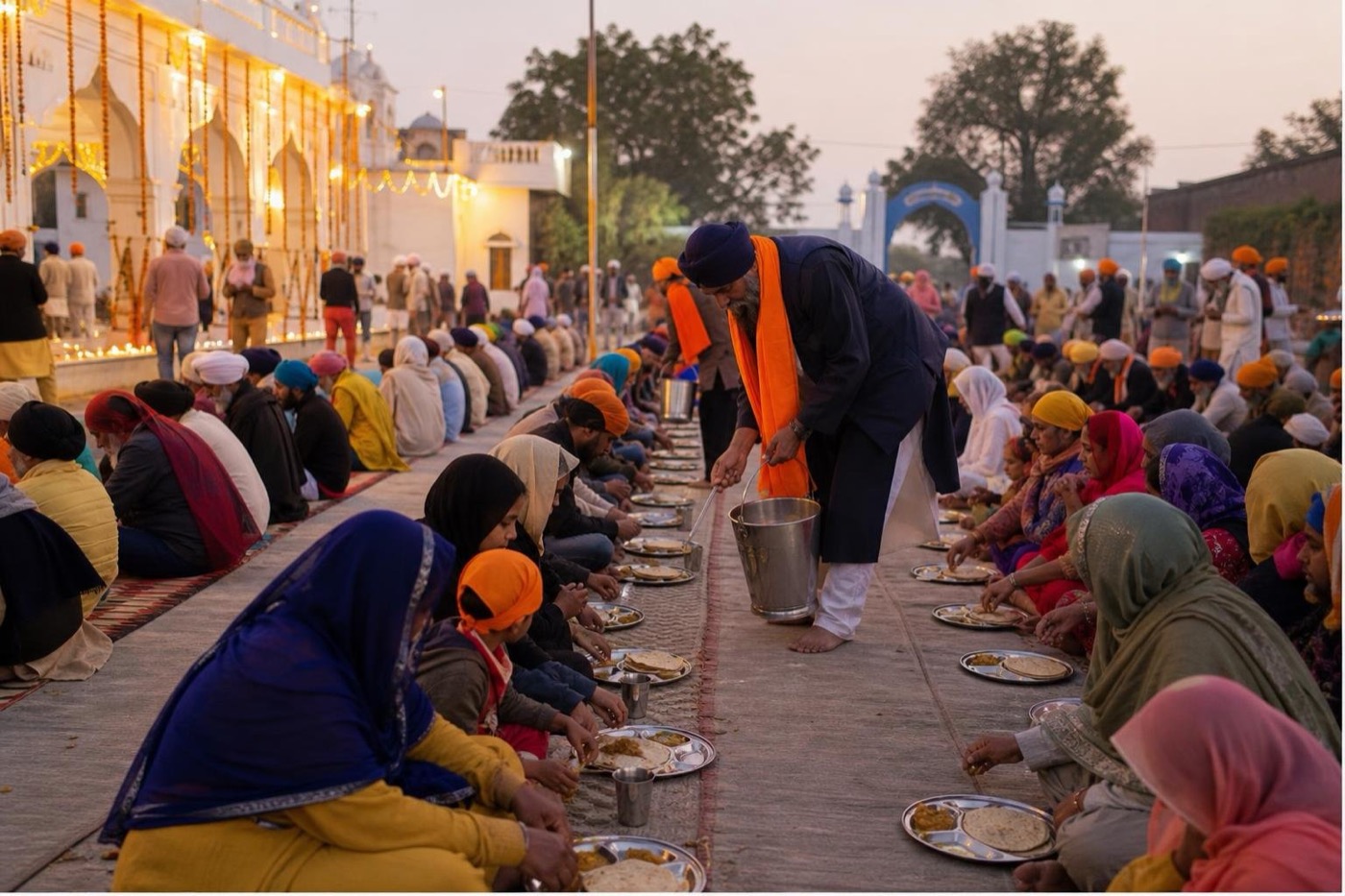
Everyone eats on the floor, side by side, on long mats. A shopkeeper next to a farmer next to a student next to a visitor who does not speak a word of Punjabi. Volunteers walk down the rows with steel buckets of dal and sabzi and baskets of rotis, and they will keep coming back until you put your hand over your thali.
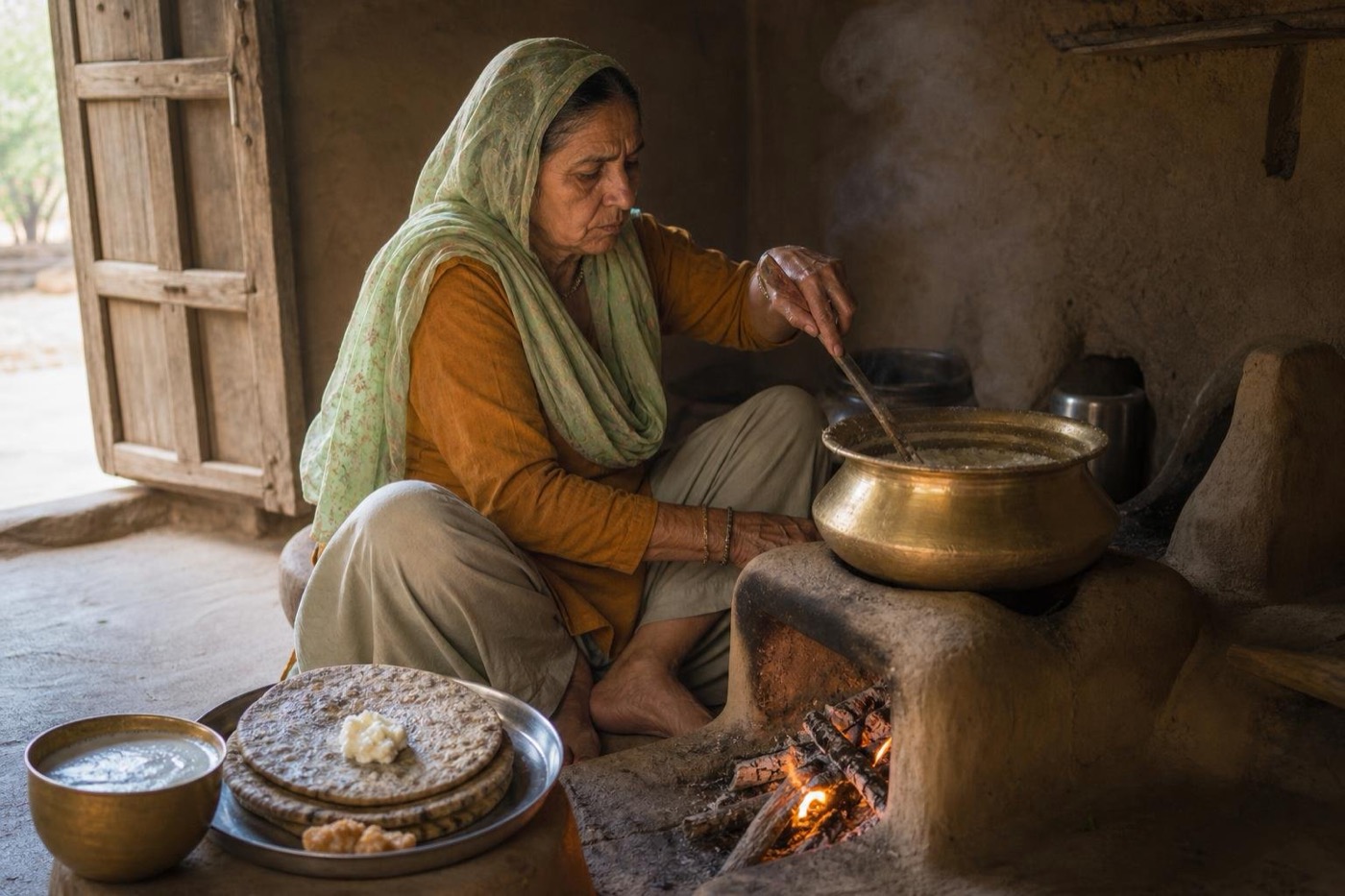
Behind the scenes, the langar hall is a small miracle. Hundreds of people, often thousands in big gurdwaras, chop, knead, stir and wash for hours. Children carry water. Grandmothers roll rotis at a speed that is honestly a little frightening.
The food is simple and vegetarian: dal, a seasonal sabzi, rotis, kheer or karah prasad. It is some of the best food you will ever eat, and that has very little to do with the recipe.
For the everyday side of the Punjabi kitchen, see our list of must-try Punjabi dishes.
The night of lights
After sunset on Gurpurab, gurdwaras and homes are lit with diyas, candles and strings of lights. Kirtan continues late into the night, and many families stay up until the time traditionally associated with Guru Nanak’s birth, in the early hours.
Under a full Kartik moon, with the gurdwara dome glowing and kirtan drifting across the fields, it is hard not to feel something, whoever you are.
How to experience Gurpurab respectfully as a visitor
- Cover your head inside the gurdwara. Scarves are usually available at the entrance.
- Remove your shoes and wash your hands and feet before entering.
- Do not carry tobacco or alcohol, and do not arrive intoxicated.
- Sit on the floor for langar and take only as much as you will finish.
- Offer to help. Washing utensils or serving water is seva, and nobody will turn you away.
Frequently Asked Questions
When is Gurpurab celebrated?
Guru Nanak Gurpurab is celebrated on Kartik Purnima, the full moon of the Hindu month of Kartik, which usually falls in November. Check with your local gurdwara for the exact date each year.
What is a prabhat pheri?
It is an early-morning procession in the weeks before Gurpurab in which devotees walk through the neighbourhood singing shabads, usually ending at a home that serves tea and sweets.
What is Akhand Path?
Akhand Path is a continuous, uninterrupted reading of the Guru Granth Sahib that takes about 48 hours and usually ends on the morning of Gurpurab.
Can non-Sikhs eat langar?
Yes. Langar is open to everyone regardless of religion, caste or background. Just cover your head, remove your shoes and sit with the sangat.
What are the Panj Pyare?
The Panj Pyare, or five beloved ones, represent the first five Sikhs initiated by Guru Gobind Singh. Five baptised Sikhs in their honour lead the nagar kirtan.
If this brought back memories of your own village, you will enjoy our story on the colourful festivals of Punjab next.