 Ek Dum Desi – Your Desi Fitness Tips Buddy Find all desi tried and tested by millions fitness tips here.
You know, sometimes, I just sit back in my tiny city apartment here in Ludhiana, the hum of traffic a constant backdrop, and I close my eyes. And what I see isn’t concrete and steel. What I see are wide-open fields, golden under the sun, a bonfire crackling in the distance, and the faces of my family, lit by the flames. It’s funny how moving away from home, from the dust and soil of my pind, makes you appreciate its true essence even more. I grew up in a small village near Bathinda, where life revolved around the seasons, the crops, and our age-old punjab traditions. Now, as a 35-year-old blogger, I find myself wanting to share those stories, those feelings, those irreplaceable moments that make up our beautiful punjabi culture.
Today, I want to talk about two pillars of our annual calendar, two celebrations that really show what Punjab is all about: Lohri and Baisakhi. They are more than just festivals. They’re feelings. They’re memories woven into the fabric of every Punjabi heart, whether you’re still living next to a mustard field or navigating the bustling lanes of a metro city.
Winter Warmth and Sweet Memories: My Lohri
The air gets crisp in December. You can feel it. That chill promises the arrival of winter. And with winter comes Lohri. For us, Lohri wasn’t just a day. It was an entire atmosphere building up. I still remember, clear as day, my nani making huge batches of ’til patti’ and ‘gajak’ every winter afternoon, the smell of sesame and jaggery filling our small village home. She’d sit by the angeethi, her hands busy, and tell us stories – especially about Dulla Bhatti, the Robin Hood of Punjab, whose tales are sung around every Lohri bonfire.
Growing up in our village, Lohri was truly magical. We kids would go door-to-door for ‘Lohri money’ or ‘Lohri ki bhel’, singing “Sunder Mundriye Ho!” at the top of our lungs. Oh, the joy of collecting peanuts, popcorn, and a few rupees! Every house would contribute something. It wasn’t about the amount. It was about community, about coming together. That’s the heart of punjabi customs, isn’t it?
The evening itself was a spectacle. A massive bonfire would be lit in the common ground of our mohalla. Families would gather, bringing their offerings: peanuts, popcorn, sesame seeds, jaggery, and rewari. We’d toss them into the flames, chanting, wishing for prosperity, health, and happiness. The warmth on your face, the smoke stinging your eyes a little, the laughter, the singing – it’s etched into my soul. My personal favourite part? Eating sarson da saag and makki di roti, piping hot, drenched in white butter, right after coming back from the bonfire. Personally, I think the smokiness from the clay chulha gets into the dal and that’s something a gas stove can never replicate. City Lohris are different, sure. People light smaller fires, sometimes just symbolic ones on balconies. But the spirit? It remains. It’s about remembering your roots, sharing sweetness, and embracing the warmth of human connection during the coldest time of the year. My first Lohri away from home, working in Chandigarh, felt so strange without the huge bonfire. But a colleague brought homemade gajak, and just that small gesture made me feel connected. It’s the little things.
From Golden Fields to Hearty Beats: The Story of Baisakhi
If Lohri marks the peak of winter’s chill, Baisakhi bursts onto the scene with the promise of spring and the bounty of a hard-won harvest. It’s a day of immense significance for every Punjabi. And honestly, it’s probably my favourite. The sheer joy, the colours, the energy! Our fields, which were green and lush during winter, would turn into a sea of shimmering gold – ready for the harvest of wheat, or ‘kanak’ as we call it. This isn’t just a festival. It’s a celebration of life, of sustenance, and of the farmer’s unwavering spirit.
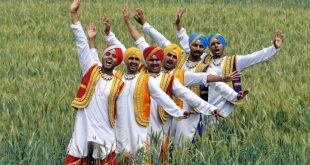
Baisakhi falls in April, usually around the 13th or 14th. This is when farmers, after months of toil under the sun, finally bring in their harvest. It’s a time for thanksgiving. For praying for good fortune for the next season. And for letting loose! Growing up, the air would be thick with the smell of freshly cut wheat, mixed with the sound of dhol beats. Every village would host a mela. People would dress in their best clothes – bright phulkaris for the women, colourful turbans for the men. We’d go to the gurdwara first, offering prayers, partaking in the langar. The reverence inside, the sense of equality and community, is something truly special about punjabi culture.
But then, outside the gurdwara, the party would begin! Bhangra performances would erupt spontaneously. Men, young and old, would jump into the circle, their energy infectious. The rhythmic thumping of the dhol, the claps, the joyful shouts – it’s pure adrenaline. Women would gather for gidda, their graceful movements and traditional songs telling stories of love, life, and longing. I remember my father, a sturdy farmer with hands roughened by years of work, would dance like a young man on Baisakhi. It was the one day he truly shed all his worries and just celebrated. Most people outside the state have no idea this even exists. They see the flashy Bollywood versions. But the real, raw energy of a village Baisakhi mela? That’s unmatched.
Which brings me to another crucial aspect of Baisakhi: its historical and religious significance. It was on this day in 1699 that Guru Gobind Singh Ji established the Khalsa panth at Anandpur Sahib. This transformation, the creation of the warrior saints, is a cornerstone of Sikh identity. So, Baisakhi is also a day for honouring this legacy, for reaffirming faith, and for remembering the principles of courage, equality, and self-sacrifice. It makes the celebration deeper, more meaningful. It’s not just about the harvest; it’s about the harvest of spirit.
More Than Just Festivals: What Punjabi Customs Mean to Me
When I moved to the city, everything felt different. The pace, the anonymity. It was a stark contrast to the close-knit community I grew up in. Suddenly, festivals felt like an effort to celebrate, rather than a natural flow of life. But even here, in the urban sprawl, I see people trying to keep these punjab traditions alive. My neighbours, who are also from Punjab, might light a few diyas for Diwali, or distribute sweets for Lohri. It’s a way to hold onto who we are, where we come from. It’s a lifeline.
These punjabi customs aren’t just quaint old practices. They are the glue that holds our society together. They teach us about sharing, about gratitude, about hard work. They remind us of our history, our values. They give us a sense of belonging, something that’s becoming increasingly rare in our fast-paced world. Think about it: a child growing up in the city might not experience the same kind of communal bonfire or village mela. But if their parents share the stories, the songs, the food – the essence is passed on. That’s what truly matters.
The thing is, our culture, our traditions, they are living things. They adapt. They might change forms, but their spirit persists. Lohri in a city might mean a small gathering in a park, or just a special meal at home. Baisakhi might mean a visit to the local gurdwara and a family dinner, instead of a grand mela. But the core messages – celebration, community, gratitude, remembrance – they remain.
Our Food, Our Roots: Flavours of Punjab
You can’t talk about punjabi culture without talking about food. It’s simply impossible. Our food is an extension of our hospitality, our love, our celebrations. For Lohri, as I mentioned, it’s all about the winter treats: the rewari, gajak, peanuts, and of course, the hearty sarson da saag and makki di roti. This meal is like a warm hug on a cold night. I remember my mother used to churn fresh white butter for it – the aroma alone was intoxicating.
Then comes Baisakhi, and the food takes on a different flavour profile. Lighter, perhaps, but equally celebratory. Sweet yellow rice (meethe chawal) often makes an appearance, sometimes Kheer, and of course, plenty of rich curries and parathas. The langar at the gurdwara, especially on Baisakhi, is a feast for the senses, prepared with such devotion and served with such humility. It embodies the very spirit of Sikhism – selfless service. And honestly, there’s nothing quite like the taste of a simple dal and roti from a langar, knowing it was cooked by hundreds of hands with so much love. It grounds you.
Look — it’s not just about the ingredients or the recipes. It’s about the shared meal, the conversations around the table, the feeling of abundance after a good harvest, or the warmth of sharing on a cold winter night. That’s a tradition in itself, passed down through generations. My own family recipes, passed from my nani to my mother and now to me, are my most treasured possessions. They connect me directly to my roots, no matter how far I travel.
Keeping the Flame Alive: Why These Traditions Matter Today
In a world that’s constantly changing, constantly rushing forward, there’s immense value in looking back. In remembering where we came from. In celebrating the things that define us. These punjab traditions of ours, they are not just relics of the past. They are living, breathing guides for the present and the future.
They teach us resilience, just like the farmer who faces every challenge the weather throws at him. They teach us community, the way everyone comes together for a bonfire or a mela. They teach us gratitude, for the blessings of a good harvest and the warmth of family. And they teach us identity. To know who you are, you must know your story. And our festivals are huge chapters in that story.
I feel it’s my duty, as someone who has seen both the village life and the city life, to bridge that gap. To remind others, and myself, that no matter how modern we become, how globally connected, the essence of our roots, our beautiful punjabi culture, is what truly anchors us. It’s the flavour we carry. So, next Lohri, find a small bonfire. Next Baisakhi, listen for the dhol. And share a story. What punjabi customs do you cherish the most?