 Ek Dum Desi – Your Desi Fitness Tips Buddy Find all desi tried and tested by millions fitness tips here.
The Vibrant Canvas of Haryana: Exploring Traditional Costumes from Phulkari to Khandwa
Picture this: golden fields swaying under the vast blue sky, the rhythmic hum of daily life punctuated by the laughter of children and the melodious tunes of folk songs. This is Haryana, a land steeped in ancient history, rich agricultural traditions, and a cultural vibrancy that’s as captivating as its landscapes. And nowhere is this vibrancy more eloquently expressed than in its traditional attire. From the intricate stitches of Phulkari embroidery that tell tales of generations, to the majestic drape of the Khandwa turban that speaks of honor and pride, the traditional Haryana traditional dress is a living tapestry woven with threads of heritage.
Here at Ek Dum Desi, we believe that clothing is never just about covering the body; it’s a narrative, a cultural identifier, and a reflection of a community’s soul. So, join me, your knowledgeable desi friend, as we journey through the captivating world of Haryanvi costume, exploring the historical roots, the specific garments, and the profound cultural significance that makes each piece a treasure. Get ready to discover the stories behind the fabric, the colors, and the embroidery that define the authentic spirit of Haryana!
The Threads of Time: A Historical Tapestry of Haryanvi Attire
Haryana’s Legacy: Where History Meets Fashion
Haryana, often referred to as the “Green Land” or the “Abode of God,” boasts a history that dates back to the Vedic period. Situated in the heart of India’s agricultural belt, its people have always been closely connected to the land. This deep-rooted connection to farming, coupled with its strategic location at the crossroads of various empires and cultures, profoundly influenced the development of its traditional attire.
Historically, the clothing needed to be practical, durable, and comfortable, suitable for long hours spent in the fields under the harsh sun or during cold winters. Yet, it also served as a powerful medium for cultural expression, social status, and celebration. Influences from the Rajputs, Mughals, and various regional communities blended over centuries, shaping a distinctive style that is both robust and aesthetically pleasing. The emphasis was always on indigenous materials like cotton, hand-spun and hand-woven, adorned with local embroidery techniques that carried symbolic meanings and preserved ancestral knowledge.
Phulkari: The Flower Work That Blooms on Fabric
More Than Embroidery: A Mother’s Love, A Daughter’s Dowry
When one speaks of Phulkari Haryana, it evokes images of vibrant threads creating stunning floral patterns, a true spectacle of artistry. The word “Phulkari” literally translates to “flower work” (‘phul’ meaning flower and ‘kari’ meaning work). But this isn’t merely an embroidery technique; it’s a profound cultural institution, primarily practiced by women in Punjab and Haryana, woven into the very fabric of their lives.
Traditionally, Phulkari was not commercially produced; it was a labor of love, crafted by mothers and grandmothers for their daughters and granddaughters. It formed an essential part of a bride’s trousseau, a collection of textiles embodying blessings, good wishes, and a lifetime of skill. Each stitch, often made without tracing the design onto the fabric, was a testament to the artisan’s intuition and mastery.
- Technique and Materials: Phulkari is distinctive for its use of the ‘darning stitch’ on the reverse side of a coarse cotton fabric, typically a hand-spun, undyed ‘khaddar’. The embroidery is done with ‘pat’, an untwisted silk floss that gives the finished product a lustrous, almost iridescent quality. The stitches are primarily vertical, horizontal, and diagonal, creating geometric and floral patterns that appear to ‘bloom’ from the surface.
- Colors and Symbolism: While Phulkari can feature a riot of colors, red was traditionally dominant, symbolizing auspiciousness, fertility, and celebration. Other colors like green, blue, yellow, and white were used to add contrast and detail.
- Types of Phulkari: The diversity of Phulkari is truly fascinating, with each type serving a specific purpose or occasion:
- Chope: This is a distinctive Phulkari where only the borders are embroidered. It’s traditionally gifted by the maternal uncle to the bride, signifying his blessings. The embroidery is typically done on red khaddar with golden or yellow silk floss.
- Suber: Unlike Chope, Suber is a fully embroidered Phulkari, completely covering the base fabric with intricate designs. It was a prized possession, made by the bride’s grandmother, meant to be worn during religious ceremonies or important family functions.
- Thirma: This particular Phulkari is unique because it’s embroidered on a white khaddar base, using white or off-white silk floss. Thirma was traditionally worn by older women or widows, signifying purity and sobriety.
- Sainchi: A rarer and more complex form, Sainchi features elaborate depictions of human figures, animals, birds, and scenes from daily life. These were often created for personal use or for special family occasions, showcasing the artisan’s exceptional skill.
- Darshan Dwar: Meaning ‘gate of vision’, Darshan Dwar Phulkari often incorporates architectural motifs, depicting temple entrances or religious structures. These were usually made as offerings to temples or shrines.
The beauty of Phulkari lies not just in its visual appeal but in the stories it tells – of family bonds, cultural heritage, and the tireless hands of women who kept this art alive for centuries. It’s a true embodiment of Haryanvi pride.
The Haryanvi Woman’s Wardrobe: Elegance in Simplicity
Ghagra-Choli-Odhanis: The Quintessential Haryanvi Ensemble
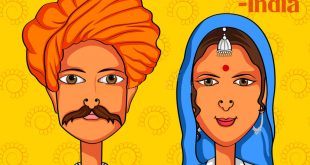
The traditional attire for women in Haryana is a striking example of elegance born from practicality. It’s an ensemble that allows for freedom of movement, essential for women actively participating in agricultural work, yet transforms into a garment of stunning beauty for celebrations. The core traditional attire Haryana for women typically consists of the Ghagra, Kurti/Choli, and Odhani/Chunri.
- The Ghagra (Lehenga): This is a long, voluminous skirt, usually ankle-length, known for its vibrant colors and wide flare. Made primarily from cotton, though silk blends are also seen, the Ghagra is designed for comfort and ease of movement. Its generous pleats allow women to work in the fields, fetch water, or participate in energetic folk dances like the Ghoomar or Loor, without restriction. They are often adorned with simple embroidery or mirror work, adding a touch of festive charm.
- The Kurti/Choli: Worn with the Ghagra, the Kurti (a short tunic) or Choli (a short blouse) is typically simple in design, allowing the Ghagra and Odhani to take center stage. These are usually made of cotton and can be either half-sleeved or full-sleeved. For festive occasions, the Kurti might feature some embroidery, often matching the Odhani, or embellishments like small shells and beads.
- The Odhanis/Chunris: The Odhani, or Chunri, is arguably the most expressive part of the Haryanvi woman’s ensemble. This long, decorated piece of cloth serves multiple purposes: as a head covering (for modesty and protection from the elements), a drape over the shoulders, and often, a way to carry small items. Haryanvi Odhanis are known for their vibrant colors, often in shades of red, orange, and maroon, and frequently feature tie-and-dye patterns (Bandhej or Bandhani) or block prints. Many are also embellished with Gota Patti work – intricate appliqué of gold or silver ribbon – adding a touch of grandeur for festive occasions. The specific way an Odhani is draped can also signify marital status or regional identity.
The Adornments: Jewelry That Tells a Story
No Haryanvi attire is complete without its traditional jewelry, which are not just ornaments but often heirloom pieces carrying deep cultural significance. Silver is a preferred metal. Prominent pieces include:
- Haasli: A sturdy, often heavy, silver necklace worn close to the neck.
- Kangan: Thick bangles, often in silver or lac, worn in sets on both wrists.
- Nath: A large, ornate nose ring, particularly for married women, symbolizing marital bliss.
- Jhumkas: Bell-shaped earrings that beautifully complement the facial features.
- Paijeb/Payal: Anklets, often adorned with tiny bells, creating a soft jingling sound with every step.
Khandwa: The Regal Turban of the Haryanvi Man
More Than Just a Head Wrap: A Symbol of Pride and Honour
Just as Phulkari defines the grace of Haryanvi women, the Khandwa defines the dignity and honor of Haryanvi men. The Khandwa is the traditional turban of Haryana, a magnificent headgear that is far more than just a piece of cloth; it is a symbol of respect, status, and protection. The general term for such a turban is ‘Pagri’, but ‘Khandwa’ refers to the specific, often elaborate, style prevalent in Haryana.
Tying a Khandwa is an art form passed down through generations. It’s a long strip of cloth, often 6 to 8 meters in length, usually made of cotton. The way it is tied can vary significantly from region to region, and even from village to village, with different folds and styles indicating a person’s community, social standing, or even the occasion. Its primary function was practical: to protect the wearer from the harsh sun, dust, and cold. However, its cultural significance runs deeper; a man’s turban is considered his honor, and touching or removing it without permission is a grave insult.
The Male Ensemble: Practicality Meets Dignity
The traditional male attire in Haryana complements the majestic Khandwa with its blend of practicality and understated dignity:
- Dhoti: The lower garment for men is the Dhoti, a comfortable and versatile piece of unstitched cloth draped around the waist and legs. The Dhoti allows for maximum mobility, making it ideal for agricultural work. It can be draped in various styles, some more elaborate for festive occasions, others simpler for daily wear.
- Kurta: Worn with the Dhoti, the Kurta is a loose-fitting, long-sleeved shirt, usually made of cotton. It’s designed for comfort in the hot climate and often features simple necklines and sometimes subtle embroidery. For festive occasions, the Kurta might be made of finer fabrics or have more elaborate embellishments.
- Kameez/Angarkha: While the Kurta is common, historical records and older traditions also mention garments like the Kameez (a longer tunic) or Angarkha (a jacket-like garment with overlapping panels) being worn by men of different social strata, especially during colder months or for formal gatherings.
- Footwear (Juttis): Traditional footwear for both men and women across Haryana and neighboring regions are Juttis. These are exquisitely crafted leather shoes, often embroidered with intricate patterns using silk threads, beads, and even gold or silver work. They are comfortable, durable, and add a final touch of ethnic elegance to the traditional ensemble.
Beyond the Fabric: Cultural Connections and Living Traditions
The traditional costumes of Haryana are not static artifacts; they are vibrant elements of a living culture, intertwined with various aspects of Haryanvi life.
Haryanvi Dances: Costumes in Motion
Witnessing traditional Haryanvi folk dances like the energetic Dhamal, the graceful Ghoomar, the seasonal Phag (performed during Holi), or the theatrical Loor (a Baisakhi dance) is to see these costumes come alive. The swirling Ghagras, the vibrant Odhanis, and the stately Khandwas all play a crucial role in the visual storytelling of these performances. The colors, the flow of the fabric, and the glittering embellishments enhance the movements, making the dances a truly immersive experience.
Festivals and Fairs: A Parade of Haryanvi Attire
Festivals are when Haryana’s traditional attire truly shines. During Teej, women adorn themselves in vibrant green Ghagra-Choli-Odhani sets, symbolizing fertility and prosperity. For Basant Panchami, yellow dominates, reflecting the mustard fields in bloom. Even during Karwa Chauth and Diwali, women proudly wear their finest Phulkari-embroidered outfits and traditional jewelry, celebrating their heritage with every stitch and sparkle.
Traditional Haryana Food: Fueling the Artisans
The simple, robust, and highly nutritious food of Haryana is another reflection of the lifestyle that created these durable and beautiful costumes. Staples like Bajra ki Roti (pearl millet flatbread), Churma (crushed roti mixed with ghee and jaggery), Lassi (buttermilk), and hearty lentil preparations have fueled generations of farmers and artisans. This wholesome diet provided the energy for long days in the fields and the meticulous, time-consuming work of Phulkari embroidery and turban tying.
Modern Threads: Haryana’s Traditional Costumes Today
Revitalization and Adaptations
In a rapidly globalizing world, Haryana’s traditional costumes are finding new relevance and appreciation. Designers are increasingly drawing inspiration from Phulkari, incorporating its motifs and techniques into contemporary fashion – from sarees and kurtis to accessories and home decor. This blend of tradition and modernity is introducing these age-old crafts to new audiences, both within India and internationally. Young Haryanvis are also rediscovering their roots, proudly donning traditional attire for weddings, cultural events, and festivals, recognizing its unique beauty and heritage.
Preserving the Legacy: Challenges and Opportunities
While interest in traditional attire is growing, challenges remain. The intricate, time-consuming nature of crafts like Phulkari means artisans often struggle to compete with mass-produced alternatives. The younger generation may also be hesitant to pursue these demanding skills. However, there are significant opportunities. Government initiatives, non-profit organizations, and cultural festivals are actively promoting Haryanvi crafts, providing training, and creating market linkages for artisans. Online platforms, like Ek Dum Desi, play a crucial role in raising awareness, educating consumers, and connecting artisans directly to a global audience, ensuring that these invaluable traditions continue to thrive.
A Stitch in Time: Haryana’s Enduring Legacy
As we conclude our journey through the captivating world of Haryanvi traditional costumes, it becomes clear that these garments are much more than mere clothing. They are storytellers, historical documents, and vibrant expressions of a resilient and proud culture. From the painstakingly hand-embroidered Phulkari, each motif a silent prayer or a cherished memory, to the dignified drape of the Khandwa, symbolizing honor and steadfastness, every piece embodies the spirit of Haryana.
At Ek Dum Desi, we believe that understanding and appreciating these cultural treasures is an essential part of embracing our collective desi pride. These costumes remind us of the rich tapestry of our heritage, connecting us to the hands that wove them, the lives they adorned, and the traditions they uphold. Let’s continue to celebrate, preserve, and wear these threads of identity with pride, ensuring that the vibrant legacy of Haryana’s traditional attire continues to inspire generations to come.