Quick answer: A proper Punjabi sarson ka saag is mustard greens slow-cooked with a smaller share of bathua or palak, green chilli, ginger and garlic, then mashed by hand, thickened with a spoon or two of makki ka atta and finished with a ghee tadka. Makki di roti is made from maize flour kneaded with warm water, patted out by hand and cooked on a tawa with a dab of makkhan. Patience, not fancy ingredients, is the secret.
The first time I tried to make saag on my own, in a rented flat in Mohali, I finished in forty minutes and felt very proud. Then I tasted it. Green, bitter, watery. My bebe would have quietly put it to one side and made something else.
That was the day I understood saag is not a recipe. It is a whole afternoon.
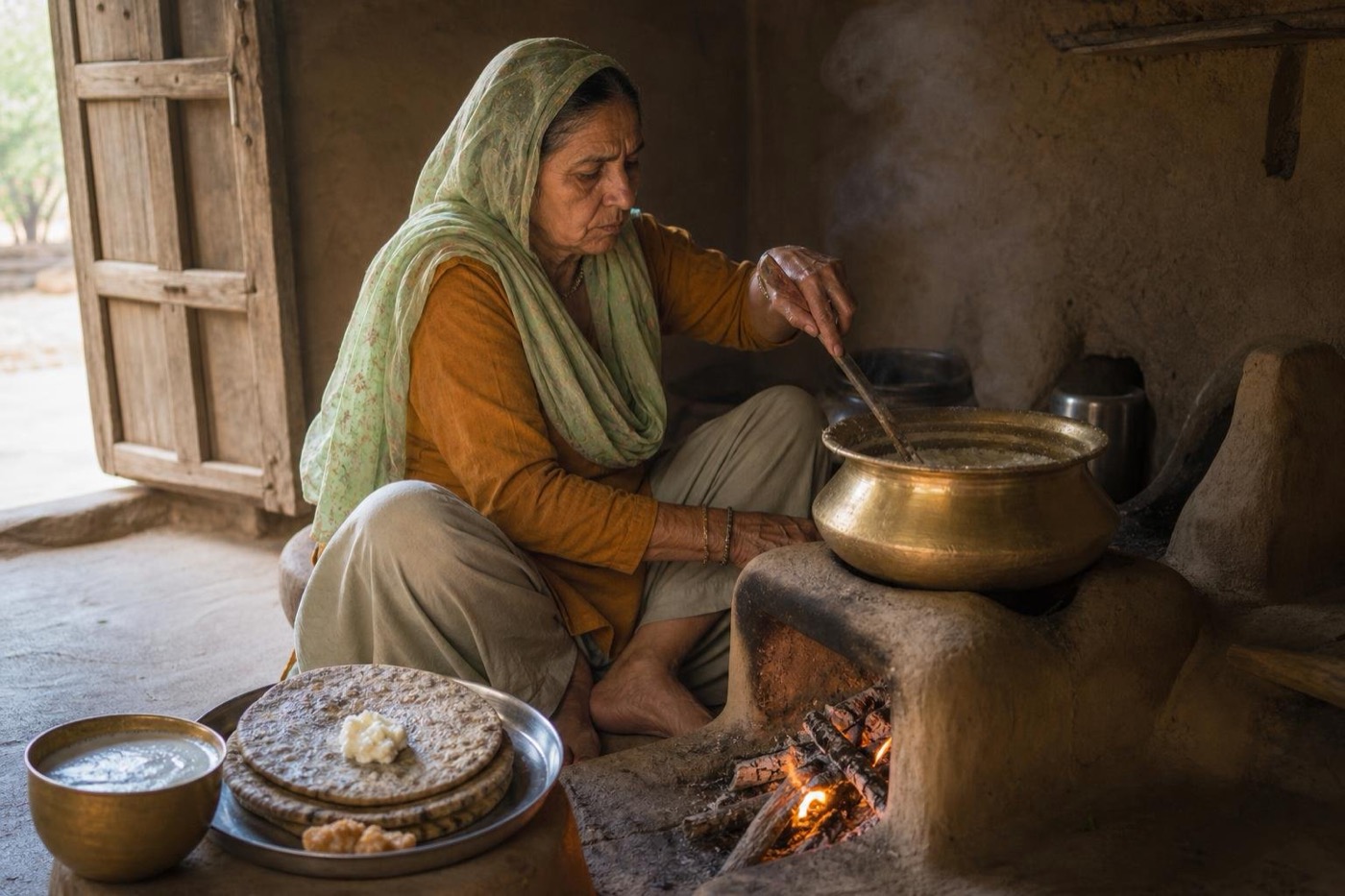
In our village, winter saag began in the fields. Women and girls would go out in the cold morning to pluck tender sarson leaves, chatting the whole way, coming back with bundles tied in old chunnis. The cleaning happened in the angan, in the sun, on a charpai. Then the big pateela went on the chulha and stayed there, bubbling slowly, while the house went about its day.
What goes into authentic sarson ka saag?
For a family of four, roughly:
- A big bunch of sarson (mustard greens), about a kilo, tender leaves and soft stems
- A smaller bunch of bathua, or palak if you cannot find bathua
- 2 to 3 green chillies, a thumb of ginger, 8 to 10 garlic cloves
- 2 tablespoons of makki ka atta
- Salt, and a little water
- For the tadka: desi ghee, one chopped onion, more garlic and ginger, a dry red chilli if you like
The ratio matters. Mostly sarson, some bathua or palak to soften its sharp bite. Too much palak and it stops tasting like Punjab.
How do you cook saag the slow way?
Clean properly. Strip the leaves, peel the thick stems and chop them small. Wash several times in a big bowl of water, lifting the leaves out so the mud stays behind. Field greens hold a lot of mitti.
Boil low and long. Put the greens in a heavy pot with chillies, ginger, garlic, salt and only a cup or so of water. The leaves release their own liquid. Cover and let it simmer on low for at least an hour and a half, stirring now and then. A pressure cooker saves time, I admit, and many busy homes use it. The flavour is a little flatter, but it is still good saag.
Mash, don’t blitz. This is where my Mohali attempt went wrong. Bebe used a wooden ghotna, a heavy mashing stick, and worked the greens until they were soft but still had texture. A mixer turns it into green chutney. If you use one, pulse briefly.
Thicken with makki atta. Sprinkle the maize flour in while stirring, so it doesn’t form lumps. Cook another twenty minutes on low. The saag will turn glossy and come together. This is when the kitchen starts smelling like home.
Tadka at the end. Heat ghee in a small pan, add chopped garlic and ginger, then onion, and fry until golden. Some families add a pinch of red chilli. Pour it over the saag and stir.
Many people say saag tastes even better the next day, reheated with a fresh spoon of ghee. I agree with them completely.
And the makki di roti?
Here is the honest truth: makki roti is harder than it looks.
Maize flour has no gluten, so it does not stretch. Take two cups of makki atta with a pinch of salt and knead it with warm water, a little at a time, using the heel of your palm. Knead each portion just before you make the roti, because the dough dries quickly.
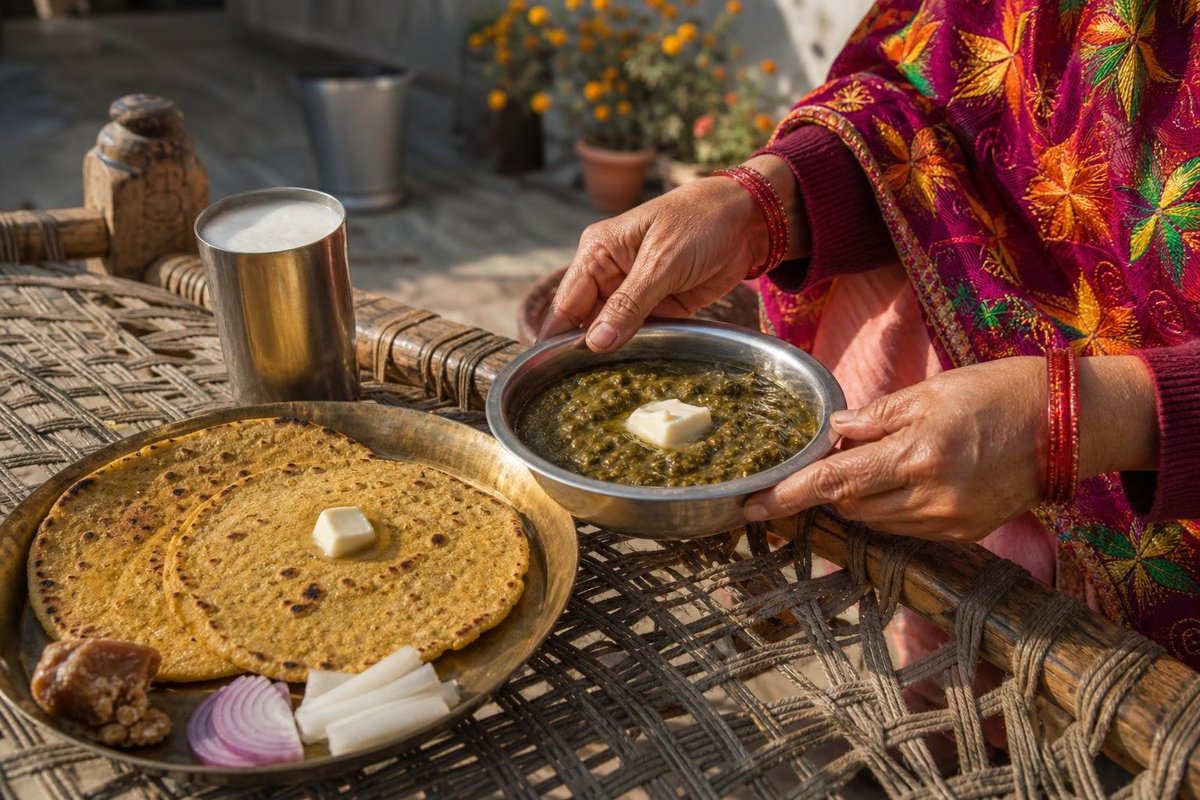
Our mothers patted it out between their palms, turning it in a circle. Beginners can press it between two sheets of plastic or on a wet cloth. Cook it on a hot tawa, flip, and finish with a good dab of white makkhan. Cracks at the edges are normal. They are part of the charm.
Some homes add a little grated mooli or methi to the dough. Others mix in a bit of wheat flour to make it easier to handle. Purists will frown, but nobody is checking your kitchen.
What do you serve with saag and makki?
White makkhan on top, a piece of gur on the side, sliced onion and mooli, and a tall glass of lassi. In many homes, there is also a pickle of gajar or gobhi that has been sunning on the chhat for a week.
We eat it on cold afternoons, especially around Lohri, when the fields are green with wheat and the first fires are lit. If you want to understand why this dish means so much to us, read our piece on the rich traditions of Punjab, from Lohri to Baisakhi. And for the wider plate, we have rounded up famous Punjabi food, from butter chicken to dal makhani.
Is saag healthy, or just comfort food?
Both, I think. Green leafy vegetables like mustard greens and bathua are a good source of fibre and several vitamins and minerals, and makki is a whole grain. The ghee and makkhan add richness that our grandparents burned off working in the fields. If you sit at a desk all day, go lighter on the butter and enjoy it in a reasonable portion. Anyone with specific dietary needs should check with their doctor or a dietitian.
Frequently Asked Questions
Why is my sarson ka saag bitter?
Usually too many mature leaves, too much sarson relative to bathua or palak, or not enough cooking time. Use tender leaves and simmer slowly for longer.
Can I make saag without bathua?
Yes. Palak works fine as the softening green. Some families also add a little methi.
How do I stop makki roti from breaking?
Knead each portion fresh with warm water, keep the roti slightly thick, and pat it on a wet cloth or between plastic sheets. A little wheat flour in the dough also helps.
How long does saag keep?
Refrigerated, it keeps for two to three days. Many families also freeze it in small portions for later in winter.
Next time you see the first bundles of sarson at the sabzi mandi, buy more than you think you need. And while the pot simmers, read about how farming in Punjab changed from the Green Revolution to today, the fields where all this begins.