Quick answer: Haldi doodh is a warm, comforting winter drink, and turmeric does carry compounds that researchers are studying for their effect on inflammation. A cup at night can soothe a scratchy throat and help you wind down, but it is not a cure for colds, infections or joint disease. If a cough, fever or pain lasts more than a few days, see a doctor instead of adding more haldi.
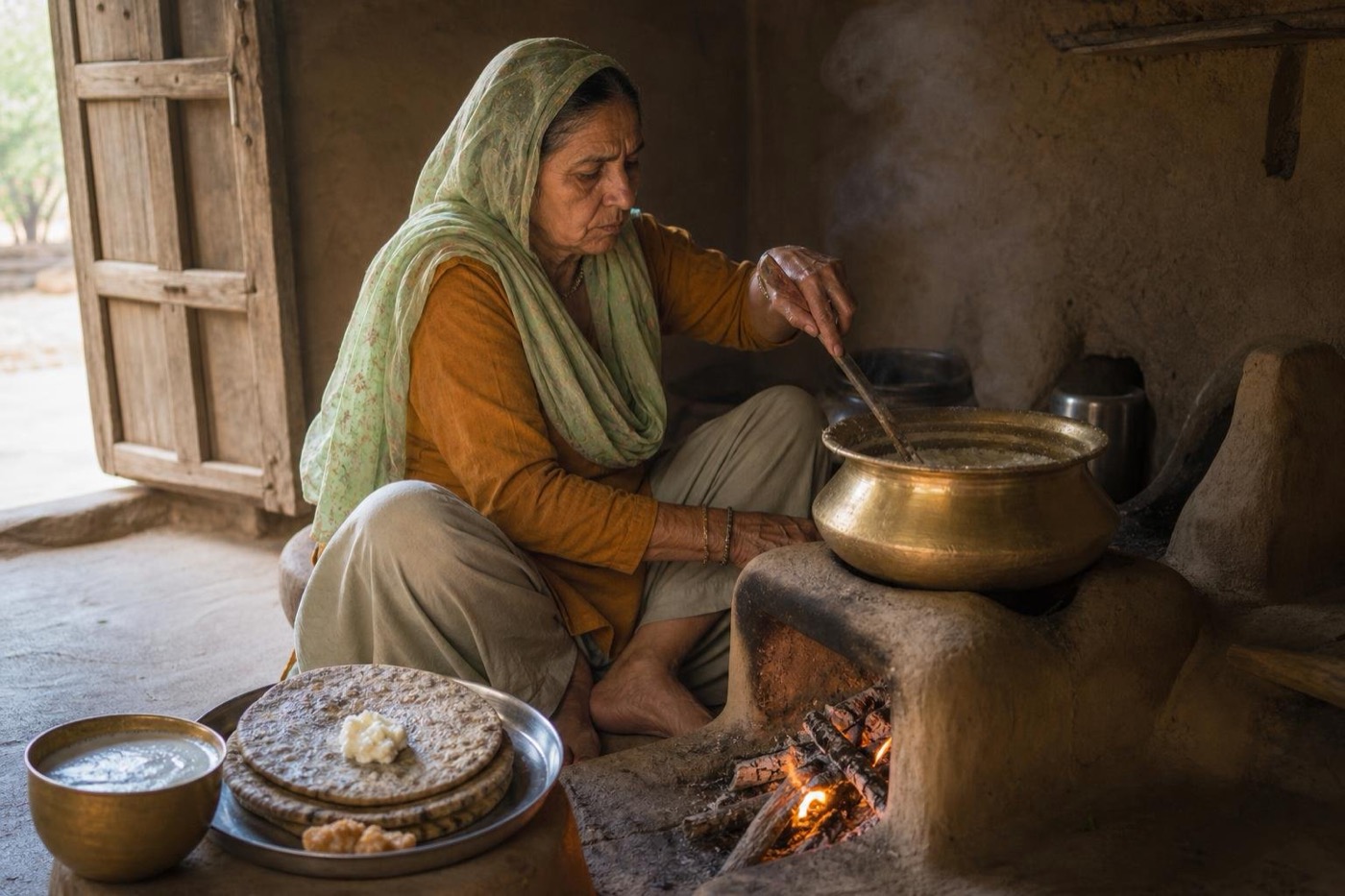
The first cold night of November in our village always smelled of two things. Burning uplas in the chulha, and haldi boiling in milk.
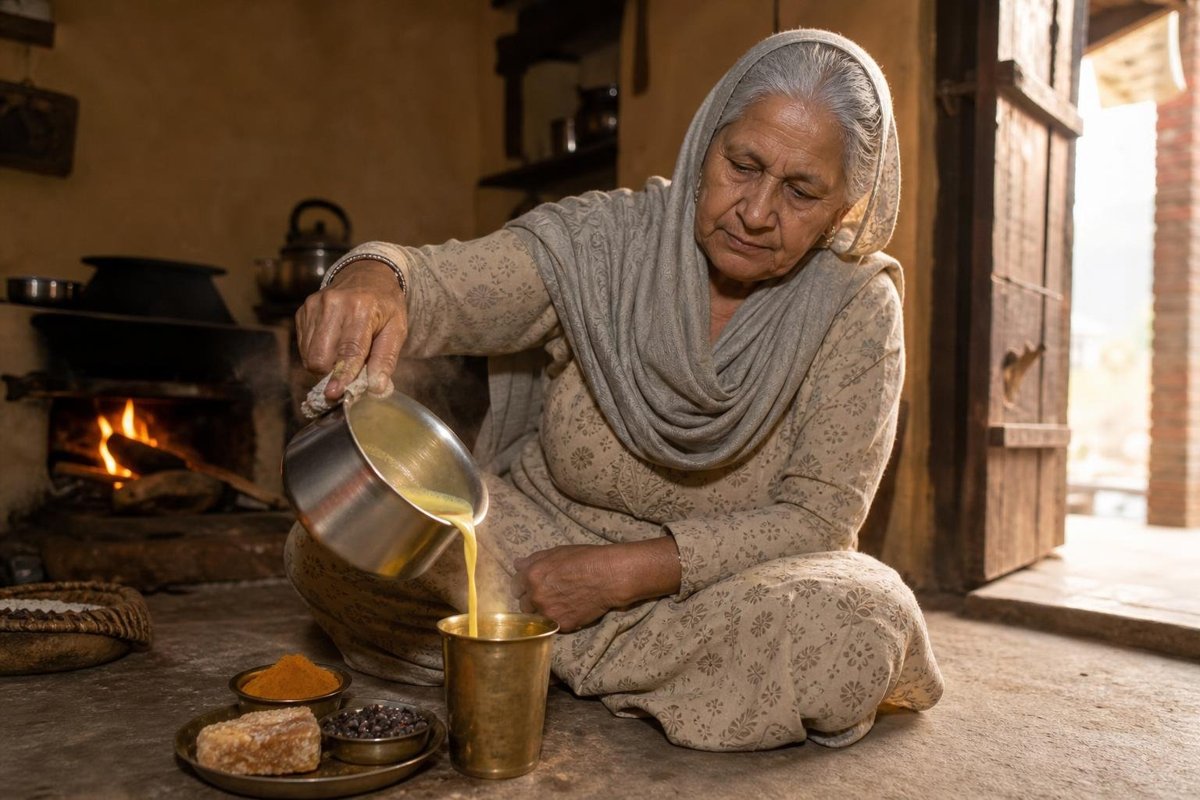
My dadi had a small brass glass that only came out for this. She would add a pinch of turmeric from the steel dabba, a crack of kali mirch, a little gur, and stir it with the same spoon for what felt like forever. If you had sneezed even once that evening, there was no escape. “Pee le, kuch nahi hoga,” she would say, and stand there until the glass was empty.
Now I live in a city flat where the winter smells of traffic, and I still make that glass most nights. But somewhere along the way I started asking a grown-up question. What does haldi doodh actually do? And what have we just believed because dadi said so?
What is haldi doodh, really?
It is milk simmered with turmeric. That is the heart of it.
Every family adds its own touch. In Haryana we put gur and black pepper. A Punjabi friend’s mother adds a bit of desi ghee and a few strands of saffron when guests come. Some Rajasthani homes I have visited use dry ginger, saunth, because it warms the body on those freezing desert nights.
What are the real haldi doodh benefits?
Let me separate this honestly, because the claims online have gone a bit wild.
What tradition says: Ayurveda has long treated haldi as a warming spice, used for coughs, for “andar ki chot” after a fall, for skin, and for general strength in winter. Our elders gave it to new mothers and to anyone who came back from the fields aching.
What is reasonably known: Turmeric contains curcumin, which scientists have studied a lot for its anti-inflammatory and antioxidant properties. Much of that work is in labs or uses concentrated supplements, not a pinch in a glass of milk. Curcumin on its own is also poorly absorbed by the body. Black pepper contains piperine, which appears to help absorption, and fat in milk or ghee may help too. So the old habit of adding kali mirch was smarter than it looked.
What it honestly feels like: a hot, slightly spicy drink before bed that relaxes you. Warm milk has always been a sleep ritual in our homes, and I think a lot of the comfort comes from that. The warmth on a sore throat is real relief, even if it does not kill any germ.
That is a fair, modest picture. A good habit, not a medicine cabinet.
What haldi doodh can’t do
It cannot treat a chest infection. It will not replace your sugar or BP tablets. It does not “detox” anything.
We see this often in WhatsApp family groups, a forward claiming turmeric milk cures everything from arthritis to serious illness. Please do not let a parent or grandparent stop prescribed medicine because of such a message. My own taya ji once delayed seeing a doctor for a cough that had stayed for three weeks because he was “already taking haldi.” It turned out to need proper treatment. He is fine now, but that delay taught our family something.
Who should be careful with turmeric milk?
For most healthy adults, a normal kitchen amount is fine. Still, a few people should check with their doctor first:
- People on blood thinners, since turmeric in larger amounts may add to the effect
- Anyone with gallstones or gallbladder problems
- People on diabetes medicines, who should keep an eye on the gur too
- Pregnant women thinking of taking turmeric supplements or very strong doses
- Those who are lactose intolerant, who might feel bloated with regular milk
Turmeric capsules are a different story from a pinch in milk. Ask a doctor before starting those.
How I make it, dadi style
One glass of milk, full-cream if you like the old taste. Bring it to a boil in a small patila.
Add a quarter teaspoon of haldi, ideally the strong, slightly rough kind you get from a local chakki rather than the bright packaged powder. Add a small pinch of freshly crushed black pepper. Some days I add a thin slice of fresh ginger or a pinch of saunth. Let it simmer on low for four or five minutes so the raw taste of turmeric goes away. Raw haldi tastes like medicine, which is why so many kids refuse it.
Turn off the flame and stir in a small piece of gur once it has cooled slightly. Adding gur to boiling milk can sometimes make it split.
Does it fit with the rest of a desi winter diet?
Beautifully. Haldi doodh was never meant to work alone. In our gaon it sat next to bajra roti, sarson, methi, til ke laddoo and all the heavy, warming food that winter brought. If you are curious about that kitchen, our story on the Haryanvi winter kitchen with bajre ki khichdi, raab and churma will take you straight back to a smoky angan.
Many of those dishes also show up in our list of traditional Haryanvi dishes you must try, and you will notice how much turmeric, ghee and jaggery run through all of them.
Across the border in Punjab, the winter rituals around fire and food tie in too. Lohri nights with til, gur and rewri come from the same instinct. We wrote about that in the rich traditions of Punjab, from Lohri to Baisakhi.
Frequently Asked Questions
Is it okay to drink haldi doodh every day in winter?
For most healthy adults, one glass a day with a normal kitchen pinch of turmeric is generally considered fine. If you have a medical condition or take regular medicines, ask your doctor once.
Does haldi doodh cure a cold or cough?
No. It can soothe a sore throat and feel comforting, but it does not cure infections. If a cough lasts more than a week or comes with fever or breathlessness, please see a doctor.
Why add black pepper to turmeric milk?
Curcumin from turmeric is poorly absorbed on its own. Piperine in black pepper appears to improve absorption, which is why the old habit of adding kali mirch makes sense.
Can children have haldi doodh?
Many Indian families give a mild version to children, with very little turmeric and pepper. Keep it gentle, and check with your child’s doctor if they have allergies or any health condition.
Tonight, when you hold that warm glass, maybe think of all the dadis who stood watching it go down. And if you want more of that old-world warmth, read our piece on the ancient traditions of Haryana that still live on today.