 Ek Dum Desi – Your Desi Fitness Tips Buddy Find all desi tried and tested by millions fitness tips here.
Yaaran-beliyan, family, fellow desi lovers! Gurpreet here, your friendly neighbourhood blogger from Ek Dum Desi. Hope you’re all doing well, wherever you are. Today, I want to talk about something that hits really close to home, something that wraps you in a hug of culture and history, something that, for me, is just pure Punjab. We’re talking about our traditional costumes.
I still remember the first time I moved from my pind, Ballo Majra, near Fatehgarh Sahib, to Chandigarh for my first job. Everything felt so new, so fast. The clothes people wore, the way they talked, even the smell of the air was different. For the first few months, I felt like a fish out of water. I tried to blend in, wore the ‘city clothes’ – jeans, t-shirts, all that. But there was always this little tug, this longing for the familiar feel of cotton kameez, the rustle of a phulkari dupatta, the sheer comfort of a well-stitched salwar. It was more than just clothes. It was identity. It was home.
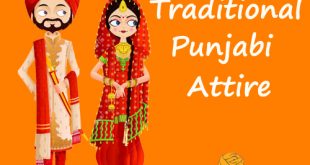
And honestly, that’s when it hit me. These weren’t just garments. They were stories. Stories of generations, of resilience, of celebrations, of everyday life in the fields under the scorching sun or during the crisp winters. Which brings me to what I truly want to share with you all today – the heart and soul of our punjabi traditional dress. The salwar kameez, the beautiful phulkari punjab, and of course, the iconic pagri turban. They are all, in essence, our punjabi attire.
The Salwar Kameez: Our Everyday Uniform, Our Pride
Let’s start with the undisputed queen: the salwar kameez. Look, for many outside Punjab, it’s just ‘Indian wear’. But here, it’s a way of life. It’s what our mothers wore every single day, whether they were cooking on the chulha, working in the fields, or going to the gurudwara. Comfort. That’s the first word that comes to mind. Pure, unadulterated comfort.
I remember my mother, Bebe ji, she always preferred the loose, pleated Patiala salwar. Said it allowed her to move freely, especially when she was churning butter or kneading dough for hundreds of rotis during a family gathering. She’d stitch most of her own kameezes, usually from cotton fabric we bought from the weekly haat in our village. The smokiness from the clay chulha would get into the fabric, that unique smell, something a gas stove can never replicate. Those simple, block-printed cotton suits, often with a matching dupatta, were her uniform. And honestly, I think she looked more elegant in those than any city woman in a fancy saree. That’s my opinion, anyway.
The beauty of the salwar kameez is its adaptability. From the everyday simple cottons to the lavish silks and brocades for weddings, it transforms. The kameez can be long or short, straight-cut or anarkali style. The salwar? Oh, the Patiala salwar! Those deep pleats gathered at the ankles. They swirl when you walk. They dance with you when you do the giddha. My bhabhi always insists on a perfectly pleated Patiala, says anything else just isn’t proper Punjabi attire. I can’t argue with her on that!
Phulkari: Threads of Our Soul, Woven with Love
Now, this one. Oh, this one is special. Phulkari. The word itself means ‘flower work’, and that’s exactly what it is – a garden of colours stitched onto fabric. But it’s so much more than just embroidery. It’s a story told in silk threads.
Growing up, we never missed seeing a phulkari in every home. Every girl in the village had at least one, often made by her mother or grandmother for her wedding trousseau. I still remember my nani making a ‘bagh’ (garden) phulkari for my masi’s wedding. She’d sit for hours, sometimes days, meticulously stitching with bright floss silk, covering the entire fabric so no base cloth was visible. Her eyes, even with age, were so sharp. The colours were incredible – deep reds, oranges, greens, yellows. Each stitch was a prayer, a blessing. You could feel the love embedded in every thread. This wasn’t something you bought off a shelf; this was a piece of someone’s heart.
The thing is, each phulkari pattern has a meaning. The chashm-e-bulbul (nightingale’s eye), the belan (rolling pin), the dhoop-chhaon (sun-shade) – they all narrate something. And it’s not just dupattas. There are phulkari shawls, ghagras, even wall hangings. Personally, I think the machine-made phulkaris you find in markets now, while pretty, just lack the soul of a hand-stitched piece. They miss the slight imperfections, the human touch that makes each original phulkari a unique masterpiece. Most people outside the state have no idea this even exists, the sheer effort and artistry involved.
The Pagri: A Symbol, A Crown, A Pledge
And then there’s the pagri. The turban. This isn’t just an accessory. This is dignity. This is honour. For Sikh men, it’s an integral part of their identity, a pledge to their faith and heritage. My father, Bapu ji, would spend a good ten minutes every morning, meticulously tying his pagri. It was a ritual. He’d stand in front of the mirror, the long cloth – sometimes seven, sometimes ten meters – expertly twisted and folded. Each layer carefully placed, the ‘larh’ (folds) just so. The finished pagri sat proudly on his head, a symbol of his strength and character.
In our village, the colour of the pagri often signified something. A vibrant yellow or orange for Baisakhi, a deep blue for religious congregations, a sober white for everyday wear or during times of mourning. And the styles! From the everyday ‘pattka’ worn by young boys to the more elaborate ‘dumalla’ worn by Nihangs, to the ‘morni’ pagri for weddings. Each style has its own significance. I remember as a child, watching my older cousin brother tie his pagri for the first time on his own. It was a moment of pride for the whole family. It marked his transition into a young man, taking on the responsibilities of his heritage.
It’s funny, when I moved to the city, I saw people wearing turbans as a fashion statement sometimes, particularly for weddings. And while I appreciate the appreciation, it’s important to remember that for many, especially in Punjab, the pagri isn’t just a trend. It’s a way of life, a commitment. It represents respect, not just for oneself, but for one’s community and faith.
Old Roots, New Branches: Our Attire Today
The thing is, tradition doesn’t mean staying frozen in time. Our punjabi attire, while deeply rooted, is also evolving. You see city girls rocking stylish kurtis with cigarette pants – a modern take on the traditional salwar kameez. Young boys might pair a designer kurta with jeans. The influence of global fashion is undeniable. But here’s the thing, when a wedding comes around, or Lohri, or Baisakhi, out come the vibrant, authentic pieces. The heavy embroidered phulkari dupattas, the crisp juttis, the perfectly tied pagris. It’s a beautiful blend.
I see youngsters, who grew up only wearing Western clothes, proudly donning a full traditional suit for a cousin’s wedding. They might not tie their own pagri every day like Bapu ji, but they know its significance. They feel the connection to their roots, even if it’s just for a day. It’s like they’re saying, “This is who I am. This is where I come from.” And honestly, that makes my heart swell. It shows that even with all the newness, the core of our culture, our traditional dress, will never fade away.
So, next time you see someone in a salwar kameez, or a beautiful phulkari, or especially a pagri, remember the stories they carry. Remember the hands that stitched them, the generations that wore them, the pride they represent. It’s not just cloth. It’s a piece of Punjab. It’s a piece of us.
What’s your favourite piece of traditional Punjabi attire? Do you have any personal memories associated with it? Share them in the comments below!