 Ek Dum Desi – Your Desi Fitness Tips Buddy Find all desi tried and tested by millions fitness tips here.
Chalo Ram Ram saareyan ne! It’s your pind ka ladka, back again with another slice of my Haryana. You know, I’ve been living in Gurugram for over a decade now. The glass towers, the fast cars, the endless noise. It’s a world away from my village in Bhiwani. Sometimes, when I’m stuck in traffic, I close my eyes and I can almost smell the wet earth after a rain, hear the rustle of bajra fields, and see the bright flash of a woman’s chunari in the distance.
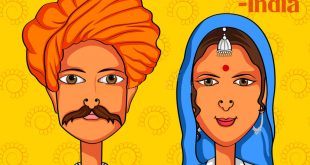
That image? That’s what keeps me going. It’s the visual of our roots, our identity. And honestly, nothing screams ‘Haryana’ more than its clothes. Our traditional attire isn’t just fabric stitched together. It’s history, it’s comfort, it’s a statement. It’s the story of our land and our people, woven into every thread. From the vibrant ‘Phulkari’ that tells tales of generations to the proud ‘Khandwa’ that sits atop a man’s head, every piece has a soul. This isn’t just about fashion; it’s about heritage, about what makes us, us.
Phulkari: A Mother’s Love, Stitched in Silk
Let’s start with something that’s probably the most iconic piece of our culture: Phulkari. When people think of phulkari haryana, they often picture the elaborate embroidery. But for me, it’s so much more personal. I still remember my Nani, with her spectacles perched on her nose, bent over a cloth, her fingers moving like magic. The sun would stream in through the small window of our angan, illuminating the colourful silk threads in her calloused hands.
She’d hum old Haryanvi folk songs, and with each stitch, she wasn’t just embroidering a design; she was weaving blessings, hopes, and stories into that fabric. Most of the Phulkari she made was for my cousins’ weddings or for special gifts. The base cloth was usually a coarse cotton or khaddar, often dyed a deep red, maroon, or dark blue. But then came the explosion of colour – vibrant silken threads in yellow, orange, green, and pink, covering almost the entire surface of the fabric, leaving very little of the base cloth visible. That’s the Bagh style, a complete garden of flowers stitched on cloth.
It wasn’t just about making it pretty. It was about marking rites of passage. A Bagh Phulkari was a must for a bride. My Ma still has the ‘Chope’ Phulkari she received from her maternal grandparents, a special kind where the embroidery is done on both sides, typically for a bride’s chunari, signifying good luck and prosperity. The thing is, no two Phulkaris were ever exactly alike, even if the patterns were similar. Each one was a unique piece of art, a reflection of the maker’s skill and sentiment.
Today, you see machine-made Phulkari everywhere, especially in the markets of Punjab and even here in the city. And honestly, while they’re pretty, they lack that soul. That slight imperfection of a hand-stitched motif, the unevenness that tells you a human being painstakingly worked on it – that’s the real beauty. It’s an art form that deserves to be cherished, not just replicated cheaply. This is such a fundamental part of our haryana traditional dress, and its true essence needs to be understood.
Ghagra, Kurti, and Chunder: The Everyday Grace of Haryanvi Women
Move beyond Phulkari, and let’s talk about the everyday haryanvi costume for women – the Ghagra, Kurti, and Chunder. Growing up in our village, you’d see women in these outfits from dawn till dusk. It’s practical, comfortable, and yet so elegant. The ghagra, a long, flowing skirt, is usually made of cotton for daily wear, sometimes in simple block prints or plain dyes. For special occasions like Lohri or a wedding, it would be heavier, made from silk or brocade, often with intricate borders or gold work.
The kurti, a short, fitted top, would be worn over the ghagra. It’s usually simple, sometimes with a little embroidery around the neck or sleeves. And then, the chunder – the headscarf. This isn’t just an accessory; it’s an integral part of the attire and cultural etiquette. It’s used to cover the head, especially in front of elders or at religious places. The way a woman drapes her chunder, the colours she chooses, it all adds to her identity.
I remember my Ma always had a stack of fresh, starched ghagras and kurtis. Her chunders were always clean, ironed, and ready. The colours were mostly earthy – deep reds, greens, blues, ochres – but sometimes, especially during fairs like the Surajkund Mela, you’d see women in truly bright, eye-popping shades of pink, yellow, and parrot green. These clothes weren’t just for looking good; they were built for hard work. Whether a woman was working in the fields, fetching water from the well, or cooking on the chulha, the ghagra-kurti-chunder provided freedom of movement while maintaining modesty.
Personally, I think this combination of practicality and grace is what makes the traditional attire haryana so special. You won’t find anything similar in city malls. These garments tell a story of resilience and rootedness, something I miss seeing more of in the urban jungle.
The Mardani Poshaak: Simplicity and Strength
Now, let’s talk about the men. When you picture a Haryanvi man, what comes to mind? A strong, sturdy fellow, right? And his clothes reflect that. The traditional haryanvi costume for men is quite simple but speaks volumes about strength and functionality. It’s typically a dhoti, a simple kurta, and most importantly, the pagri or Khandwa.
The dhoti, a long piece of unstitched cloth, is draped around the legs. It’s incredibly comfortable, especially in our hot summers. And it allows for great freedom of movement – perfect for working in the fields, wrestling in the akhaada, or simply sitting cross-legged on a charpai. My Bapu always wore a white dhoti and a plain white kurta. It was his uniform, every single day. He’d say, “Clean clothes, clean mind.”
The kurta, usually a loose, long-sleeved shirt, is also mostly cotton. White is a common colour, symbolizing purity and simplicity, but you’d also see light blues or greens. These clothes might seem very basic to an outsider, but they are perfectly suited to the climate and the lifestyle of rural Haryana. There’s no fuss, no frills; just comfort and durability. This practical elegance is a core characteristic of haryana traditional dress.
The Khandwa: A Crown of Honour
Which brings me to the pièce de résistance of male Haryanvi attire: the khandwa. This isn’t just a turban; it’s a symbol. It’s honour, respect, dignity, and identity all wrapped into several yards of cloth. A Haryanvi man without his Khandwa is like a king without his crown. My Dada ji (grandfather) never stepped out of the house without his perfectly tied Khandwa. It was always spotless white, sometimes a creamy off-white, and it sat majestically on his head.
The way it’s tied is also specific. It’s a skill passed down through generations. A well-tied Khandwa not only protects the head from the harsh sun but also gives the wearer an air of authority and wisdom. It’s worn during panchayat meetings, festivals, weddings, and all important ceremonies. It’s a sign of maturity and responsibility. To remove someone’s Khandwa is considered a grave insult, and to place it at someone’s feet is the ultimate act of humility and seeking forgiveness.
The Khandwa can be quite elaborate too, especially for weddings. Then it might be adorned with a kalgi (plume) or have special patterns woven into the fabric. The colours might also shift – from a deep saffron for auspicious occasions to lighter shades for everyday. Most people outside the state have no idea this even exists, or the profound significance it holds. It’s a shame, because it truly defines a Haryanvi man.
I remember one time, during a village fair, there was a turban-tying competition. Young boys, barely teenagers, would compete against older men, trying to tie the perfect khandwa in the shortest time. It was a spectacle! This tradition is slowly fading in cities, which makes me a little sad. When I see young men in cities preferring caps or just leaving their heads bare, I sometimes wonder if they know what they’re missing – that connection to centuries of tradition, that silent promise of responsibility that the Khandwa represents.
Beyond the Main Pieces: The Sparkle and the Season
Of course, no discussion of traditional attire haryana is complete without mentioning the little details. For women, jewellery plays a big part. The ‘Borla’ on the forehead, the heavy silver anklets, the ‘Kanthi’ necklace, and the ‘Haathphool’ – they all add to the grandeur of the ensemble, especially for celebrations. The silver jewellery, often chunky and rustic, complements the colourful clothes beautifully. It’s not about delicate filigree; it’s about bold statements.
And let’s not forget how clothes adapt to seasons. While cotton reigns supreme for summer, winter sees a shift to warmer fabrics. Woolen shawls, thicker ghagras, and kurtis made of warmer material come out. Our ancestors knew exactly what to wear, when to wear it, and how to make it last. Everything was considered, from the weather to the occasion.
Look – for me, writing about our clothes is like looking through an old family album. Each garment holds a memory, a story, a connection to the soil and the people who raised me. These aren’t just pieces of cloth. They are carriers of culture, silent guardians of our past, and living reminders of where we come from. They tell us that even in this fast-paced world, there’s value in tradition, in simplicity, and in embracing our unique identity.
So next time you see someone in a haryana traditional dress, whether it’s a woman with a vibrant Phulkari or a man with a proud Khandwa, take a moment. See past the fabric. See the centuries of stories, the resilience, the love, and the unyielding spirit of Haryana stitched right into it. Isn’t that something truly special?